





Spotlights
Animal Technician, Artificial Insemination Technician (AI Technician), Artificial Inseminator, Breeder, Dog Breeder, Large Herd Specialist
The sun rises over pastures, barn doors swing open, and within minutes an Animal Breeder is stepping into stalls, paddocks, and hatcheries to tend to the creatures in their care. It might be checking on a pregnant mare, weighing newborn chicks, examining a litter of puppies, or adjusting feed for a herd at peak breeding season. Animal Breeders show up early and stay late when needed, dedicated to the health and welfare of animals that rely entirely on their care. For anyone who wants a career that blends patience, biological knowledge, hands-on nurturing, and deep respect for living things, animal breeding offers all of that and more.
Many people picture Animal Breeders simply pairing animals, and selective pairing is part of the work, but most days involve far more: daily health checks, monitoring nutrition, maintaining detailed lineage and performance records, preparing clean and safe birthing or hatching areas, assisting with difficult deliveries, and caring for fragile newborns. Over the course of a week, a breeder might adjust a breeding schedule to match optimal cycles, treat a minor infection, socialize young animals to make them suitable for new homes, disinfect enclosures to stop disease spread, consult with veterinarians about genetic health, and meet with buyers or placement partners to ensure animals go to responsible homes. Between direct care tasks, they study breed standards, update pedigree documentation, repair fences and shelters, order feed and medical supplies, and keep detailed records of births, weights, health history, and genetic lines. Animal Breeders work closely with veterinarians, livestock managers, animal nutritionists, agricultural extension agents, pet owners, and fellow breeders who share a commitment to ethical practices. Some work with companion animals like dogs and cats, some with livestock such as cattle, goats, or poultry, some with specialty animals like horses or exotic species, and some in conservation-focused programs breeding endangered wildlife.
To get the job done, Animal Breeders use feeding equipment, grooming tools, medical supplies for basic care, record-keeping software or journals, genetic reference materials, temperature-controlled incubation or housing systems, and protective clothing to keep both themselves and the animals safe. The work matters because healthy, well-bred animals lead better lives, support sustainable food systems, preserve rare and valuable bloodlines, and bring companionship and purpose to families. Animal Breeders also protect animal welfare by following ethical breeding guidelines, screening for hereditary health issues, educating buyers about proper care, and continuously refining their practices to improve animal well-being generation after generation.
- Improving the genetic makeup of animals, making them healthier and more productive
- Ensuring animals possess valuable traits needed for specific goals
- Getting to work around the animals you love!
Working Schedule
- Animal Breeders may work full- or part-time jobs, depending on the employer’s needs. Some may be assigned to shifts, requiring night or weekend work hours. Travel may be necessary.
Typical Duties
- Meet with animal owners to discuss their needs and objectives for breeding
- Develop and oversee ethical breeding programs
- Consider the appropriate type of breeding, such as pure breeding, crossbreeding, or line breeding
- Assess parent animals to determine which have the desired traits
- Review parent pedigrees (i.e., genetic backgrounds) to avoid problems
- Keep tabs on reproductive cycles to schedule optimal mating schedules
- Arrange situations and environments for natural breeding opportunities
- Use assisted reproductive technologies, as needed
- Deliver or assist with the delivery of newborn animals
- Maintain documentation of all pairings and subsequent offspring
- Keep selected offspring as future breeders, to continue and enhance the passage of desired traits
- Take care of animals and tend to their dietary, health, and environmental needs
- Clean animal living quarters and sanitize items
- Ensure timely vaccinations and medical care are provided by veterinarians
- Enter animal shows and competitions
- Advertise animals for sale; screen potential buyers to ensure a good match
- Promote the business or program via marketing (branding, ads, etc.) and in-person networking
- Sell animals; acquire the appropriate documentation and paperwork for breeds with certain traits; enter animals into competitions
- Stay up-to-date on trends, consumer preferences, techniques, and technologies
- Engage in professional organization activities to learn and make connections
- Order supplies, such as animal food, collars, bedding, medical items, etc.
Additional Responsibilities
- Specialize in a particular animal type or activity, such as breeding dogs for service programs, breeding cats for shows, breeding dairy cattle for better milk production, or breeding horses for ranch use
- Some breeders work with exotic animals like birds, fish, small mammals, or reptiles Provide customer service in person or via phone and email; answer questions, provide tips, and offer recommendations
- Arrange for safe transportation and sturdy exhibit enclosures
- Understand and comply with state, federal, and other guidelines related to ethical standards
- Maintain budgets, deposit funds, keep tax records
- Order and receive supply shipments. Carry out retail operation tasks, such as ringing up sales and filing invoices and receipts
Animal Breeders work to improve the health, quality, productivity, and desirable characteristics of domesticated animals through carefully planned breeding programs. They may work with cattle, horses, pigs, sheep, goats, poultry, dogs, cats, and other animals, depending on their specialization. Their goal is to produce healthy offspring with traits suited for farming, companionship, work, sport, or other purposes.
A typical day may begin with checking on the animals, making sure they have enough food and water, and examining their overall health. They observe animals for signs of illness, injury, reproductive readiness, and other physical or behavioral changes. They also maintain records of each animal's ancestry, medical history, reproductive performance, and genetic traits.
Much of their work involves selecting animals for breeding based on characteristics such as size, strength, temperament, fertility, appearance, disease resistance, and productivity. They may study pedigrees, genetic information, and breeding histories to determine which animals are most suitable for producing healthy offspring with desirable characteristics.
Throughout the day, Animal Breeders may monitor mating activities, assist with artificial insemination, track pregnancy progress, and help care for pregnant animals and newborn offspring. Depending on the species, they may work with veterinarians and reproductive specialists to conduct health examinations, fertility testing, ultrasounds, or other reproductive procedures.
They also manage breeding schedules, maintain clean and safe animal housing, oversee feeding programs, and monitor the growth and development of young animals. When offspring are born, they check for signs of healthy development and make sure newborns receive proper nutrition and care.
Soft Skills
- Adaptable
- Attention to detail
- Commitment
- Communications
- Compassion
- Coordination
- Detail-oriented
- Independent
- Integrity
- Monitoring
- Multitasking
- Objectivity
- Organized
- Patience
- Physical fitness
- Self-motivated
- Sound judgment
- Trustworthiness
Technical Skills
- Animal breeding principles and risks
- Animal husbandry
- Basic animal genetics
- Data collection and analysis programs and methods
- First aid and personal protective equipment
- Pedigree and registration software such as ZooEasy
- Safe animal handling
- Sanitation and disinfecting procedures
- Veterinary care
- Cattle Breeder: Selects and breeds beef or dairy cattle to improve traits such as meat quality, milk production, growth rate, fertility, disease resistance, and temperament.
- Horse Breeder: Produces horses for racing, riding, competition, work, or recreation. They evaluate bloodlines, physical structure, movement, athletic ability, and temperament when selecting breeding pairs.
- Swine Breeder: Breeds pigs to improve growth rates, litter size, feed efficiency, meat quality, and disease resistance. They monitor reproductive cycles and manage breeding programs on pig farms.
- Sheep and Goat Breeder: Selects sheep and goats for desirable traits such as meat production, milk yield, wool or fiber quality, fertility, and adaptability to different environments.
- Poultry Breeder: Breeds chickens, turkeys, ducks, and other domestic birds to improve egg production, meat quality, growth, fertility, and disease resistance.
- Dog Breeder: Selects and breeds dogs to maintain or improve specific physical characteristics, temperament, health, and working abilities. Responsible breeders conduct health screenings and genetic testing to reduce the risk of inherited conditions.
- Cat Breeder: Breeds domestic cats to maintain particular breed characteristics, coat patterns, physical features, and temperaments while prioritizing genetic health and responsible breeding practices.
- Aquaculture Breeder: Breeds fish, shrimp, shellfish, and other aquatic species for commercial production, conservation, or the aquarium trade. They manage spawning, select breeding stock, and monitor the health and development of offspring.
- Animal production facilities
- Aquariums
- Equestrian centers and stables
- Farms and ranches
- Pet stores
- Research centers and universities
- Self-employed workers
- Zoos
Animal breeders are expected to provide the animals they’re responsible for with a good quality of life. That means providing adequate food, water, shelter, and veterinary care, as well as opportunities for exercise and socialization.
They must be extremely knowledgeable about the breeds, pedigrees, and genetic traits of the animals they breed. In addition, breeders should be careful to select healthy, compatible parents able to produce offspring that meet the desired standards. It’s vital that breeders comply with ethical practices and communicate honestly with potential buyers.
Genetic technologies are a hot trend in the world of animal breeding, enabling breeders to select specific traits and achieve results such as disease-resistant pigs.
One technique is marker-assisted selection, which uses molecular markers to identify specific genes or traits in animals. As the Biomedical Journal of Scientific & Technical Research puts it, “Genetic engineering involves the incorporation of DNA markers for selection (marker-assisted selection, MAS), to increase the efficiency of the so-called ‘traditional’ methods of breeding based on phenotypic information.”
Tied to this is genomic selection, a technique that relies on DNA sequencing programs to analyze an animal’s genome to predict its breeding value at a young age. Another trend is precision livestock farming, which uses sensors, data analytics, and automation to collect data and help breeders make informed decisions.
To use these advanced techniques and technologies, you may need to complete a college degree. But the demand for trained workers is there!
“The global animal genetics market size…is expected to reach 9.66 billion in 2027,” writes Emergen Research. “However, high cost of animal testing, dearth of well-trained professionals, and low awareness of advanced animal genetic tools and importance of animal testing are some key factors expected to hamper market growth to a certain extent during the forecast period.”
Animal Breeders often grew up around animals. They may have lived on a farm or in a rural area, exposed to lots of different types of animals, such as dogs, horses, pigs, or cows.
Some simply had a ton of pets as a child; others participated in 4-H, Future Farmers of America, National High School Rodeo Association, or other animal-related activities during their school years.
Most are passionate about caring for animals, have empathy and compassion, and understand the practical aspects of running or working for a breeding business.
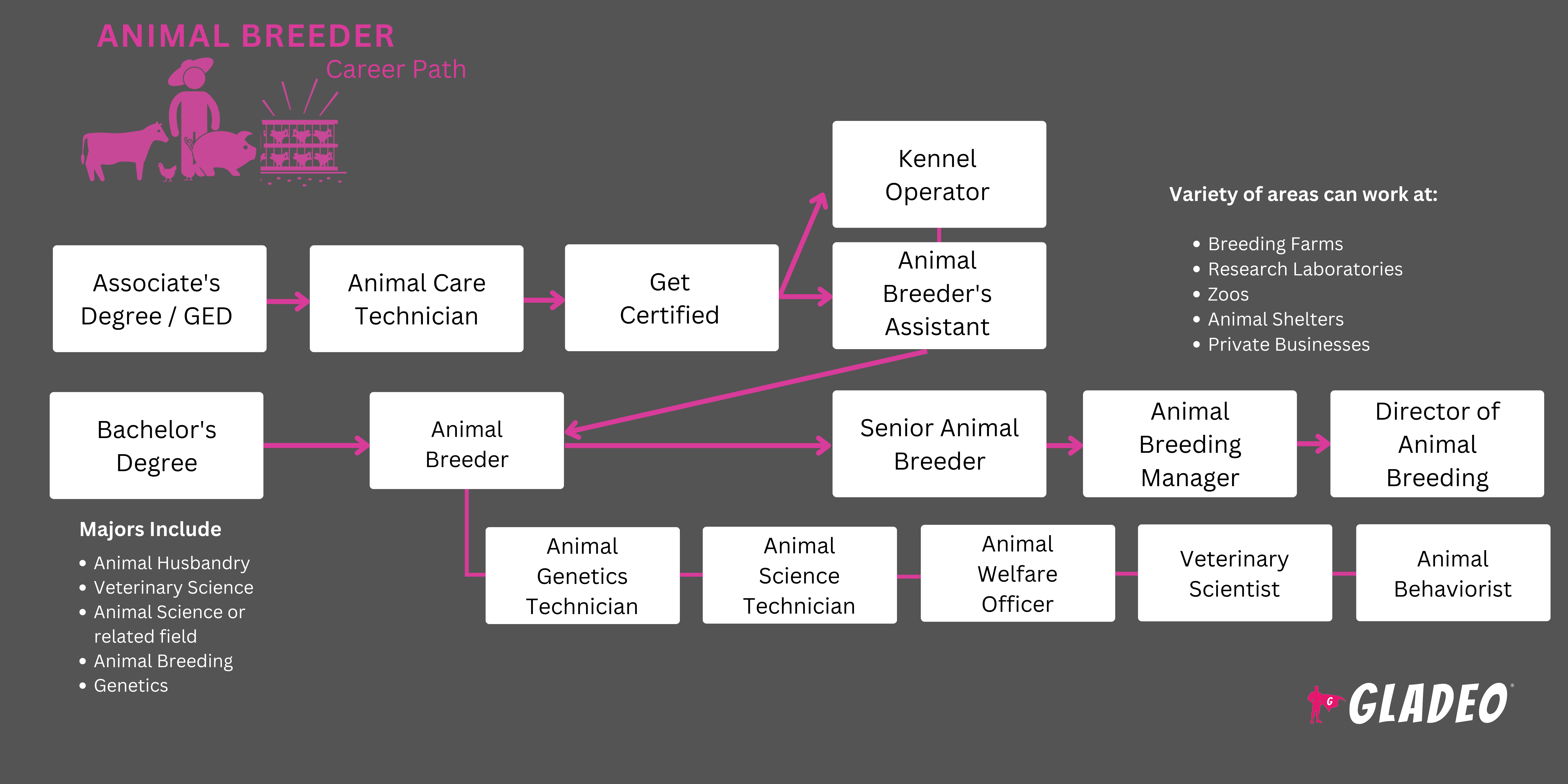
Animal Breeders typically need a high school diploma, although many employers prefer candidates with an associate or bachelor's degree in animal science, animal husbandry, agricultural science, veterinary science, biology, or a related field. The educational requirements vary depending on the animals being bred and the size and type of breeding operation. Some breeders learn through hands-on experience working on farms, ranches, breeding facilities, or animal care businesses, while others pursue formal education to develop a deeper understanding of animal genetics, reproduction, nutrition, and health.
Students can take courses in relevant subjects such as:
- Introduction to Animal Science
- Animal Genetics and Heredity
- Animal Reproduction and Breeding
- Animal Anatomy and Physiology
- Animal Nutrition and Feeding
- Livestock Production and Management
- Veterinary Science and Animal Health
- Animal Behavior and Welfare
- Reproductive Biotechnology
- Artificial Insemination Techniques
- Animal Disease Prevention and Biosecurity
- Agricultural Business and Farm Management
- Statistics and Genetic Data Analysis
Training prepares Animal Breeders to select suitable breeding pairs, evaluate genetic traits, monitor reproductive cycles, and care for pregnant animals and newborn offspring. They learn to maintain breeding records, identify inherited health conditions, manage animal housing, and recognize signs of illness or reproductive problems. Depending on their specialty, they may also receive training in artificial insemination, embryo transfer, pregnancy diagnosis, genetic testing, and assisted reproductive technologies.
Practical experience is especially important in this career. Students can gain valuable skills through internships, apprenticeships, or entry-level positions at livestock farms, horse breeding facilities, poultry operations, animal shelters, veterinary clinics, and specialized breeding businesses. Those who operate their own breeding businesses may also benefit from training in animal business management, marketing, financial planning, and applicable animal welfare regulations.
- Take biology, chemistry, agricultural science, mathematics, and environmental science classes if your school offers them
- Join 4-H, Future Farmers of America (FFA), livestock clubs, or animal science organizations to gain exposure to animal care and breeding
- Volunteer at farms, ranches, animal shelters, veterinary clinics, or animal rescue organizations
- Visit livestock farms, horse breeding facilities, poultry operations, or specialized breeding centers and ask breeders about their daily responsibilities
- Learn how to identify different animal breeds and understand their physical characteristics, temperaments, and common inherited traits
- Gain hands-on experience feeding, grooming, handling, and caring for animals under proper supervision
- Research animal genetics, heredity, reproductive cycles, and responsible breeding practices
- Consider pursuing a degree in animal science, animal husbandry, agricultural science, veterinary science, or biology
- Take college courses in animal reproduction, genetics, nutrition, anatomy, physiology, and livestock management
- Seek internships or part-time work with farms, breeding facilities, veterinary clinics, or agricultural research centers
- Learn about artificial insemination, pregnancy monitoring, genetic testing, and other reproductive technologies
- Participate in livestock shows, agricultural competitions, and animal science research projects
- Programs accredited by recognized educational or agricultural authorities, with coursework in animal science, animal husbandry, or related fields
- Instructors who are experienced Animal Breeders, veterinarians, animal scientists, and livestock production professionals
- A curriculum covering animal genetics, heredity, reproductive biology, animal nutrition, anatomy, and physiology
- Specialization options in cattle, horses, swine, sheep, goats, poultry, companion animals, or aquaculture
- Hands-on training with different animal species and opportunities to participate in supervised breeding activities
- Access to livestock facilities, animal laboratories, veterinary clinics, farms, and breeding research centers
- Training in artificial insemination, embryo transfer, pregnancy diagnosis, genetic testing, and reproductive biotechnology
- Courses covering animal health, disease prevention, biosecurity, animal behavior, and welfare standards
- Instruction in pedigree analysis, genetic selection, breeding records, and the prevention of inherited disorders
- Opportunities for internships, apprenticeships, and partnerships with commercial farms, breeding facilities, and veterinary organizations
- Training in farm management, agricultural business, marketing, and financial planning for those interested in operating their own breeding businesses
- Clear information about tuition, laboratory fees, animal care expenses, financial aid, and scholarships
- Strong graduate employment outcomes and connections with farms, livestock producers, animal research institutions, and breeding organizations
- Scan job portals like Indeed.com, Glassdoor, ZipRecruiter, Craigslist, and agriculture-related job boards include:
- Do a Google search of animal breeders in your local area and check out their websites. If they don’t have a career page, send them an email asking about openings
- Review job posts for keywords. Work those into your application materials
- Let your network know you’re looking for work. Many animal breeding jobs are found through personal connections
- A lot of workers in this field are self-employed. Commercial breeding operations, such as large-scale livestock or pet breeding businesses, may use a mix of self-employed breeders and employees
- Reach out to former coworkers, supervisors, teachers, or customers. Ask if they’ll serve as personal references. Don’t give out their contact information without permission
- Review sample Animal Breeder resumes and interview questions
- Research potential employers or clients, so you can learn their goals and values
- Get familiar with the vocabulary of the field and be ready to use it during interviews or meetings
- Master all of the applicable software programs and techniques you need to know
- Keep up with changes by reading, taking online classes, and talking to other breeders
- Build a solid reputation by taking excellent care of all animals you’re entrusted with
- Keep diligent records and always do ample research before making any breeding decisions
- Pay attention to optimal mating times and ensure arrangements are made in advance
- Keep organized and on schedule. Complete daily tasks and help other workers, as needed
- Find ways to improve efficiency and productivity, while staying compliant with laws, policies, ethical practices, and applicable state and federal guidelines
- Consider getting specialized in a hard-to-fill niche area, or completing a certification or degree if it’ll help your career!
- Advanced technologies and techniques which may require a degree to master include:
- Bioinformatics
- CRISPR-Cas9 and genome editing
- Embryo sexing
- Embryo transfer
- Gene knockout/knock-in
- Genetic markers
- Genomic selection
- In Vitro Fertilization
- Marker-Assisted Selection
- Transgenic animals
- Build strong working relationships with managers, clients, professional organizations, and local agencies
- Participate in professional associations to learn, make friends, and discover exciting new opportunities (see our list of Recommended Resources)
- If your current employer doesn’t have opportunities for advancement, consider applying for a job at a larger organization—or starting your own business!
Websites
- American Angus Association
- American Association of Zoo Keepers
- American Breeder
- American Dairy Goat Association
- American Humane Association
- American Kennel Club
- American Paint Horse Association
- American Poultry Association
- American Quarter Horse Association
- American Rabbit Breeders Association
- American Society for the Prevention of Cruelty to Animals
- American Society of Animal Science
- American Veterinary Society of Animal Behavior
- Association of Zoos & Aquariums
- Backyard Chickens
- Certified Applied Animal Behaviorists
- International Cat Association
- International Horsemanship Association
- National Association of Animal Breeders
- National Pygmy Goat Association
- National Reining Horse Association
- National Swine Registry
- Raising Canine
- The Association of Professional Dog Trainers
- The Goat Spot
- The Jockey Club
- The Livestock Conservancy
- The Wildlife Society
- U.S. Environmental Protection Agency
- U.S. Fish and Wildlife Service
- Zoological Association of America
Books
- Starting a Dog Breeding Business: Step by Step How to Get Money, Supplies & Equipment, by Brian Mahoney
- Understanding Animal Breeding, by Richard Bourdon
- Understanding Animal Breeding and Genetics, by Samantha Sanders
Animal breeding is an evolving field, with significant scientific advancements being made. It may be challenging to keep up with the trends and changes. Another factor to consider is that employers and clients can be finicky and impatient, but Animal Breeders must maintain high ethical standards, comply with laws, and take care of the animals they’re responsible for.
If you’re interested in working with animals via a different occupation, check out the suggestions below!
- Animal Behaviorist
- Animal Caretaker
- Animal Control Worker
- Animal Nutritionist
- Animal Photographer
- Animal Trainer
- Equine Trainer
- Marine Biologist
- Veterinarian
Newsfeed

Featured Jobs
Online Courses and Tools
Annual Salary Expectations
New workers start around $35K. Median pay is $37K per year. Highly experienced workers can earn around $43K.
Annual Salary Expectations
New workers start around $36K. Median pay is $38K per year. Highly experienced workers can earn around $47K.