






Spotlights
Animal Care Giver (ACG), Aquarist, Dog Bather, Dog Groomer, Groomer, Kennel Attendant, Kennel Technician (Kennel Tech), Pet Groomer, Pet Stylist, Zookeeper
Every day, we’re surrounded by animals sharing the planet with us…even if we don’t see or notice them. Most of these animals live in the wild, but millions live under the direct care of humans—either as pets, livestock, or for other reasons. Some of these animals stay in temporary environments such as kennels and shelters, while others are kept in zoo enclosures designed to mimic their natural habitats.
Animal Caretakers and Kennel Operators take care of animals in many different circumstances. They ensure the animals under their care are well-fed, receive attention and sufficient exercise each day, and are bathed and groomed when it is safe to do so. They monitor animals for signs of illness, injury, or pests and arrange medical treatment, when necessary. In addition, they make sure that living quarters are kept clean and free from debris or hazards.
Some caretakers play an active role in determining diets or providing training services to curb unwanted behaviors. They may also arrange adoption screenings, help with vaccinations, answer phones, and manage administrative tasks such as recordkeeping. Taking care of animals is a big responsibility, but the jobs can be very rewarding!
- Taking good care of domesticated animals in need, or wild animals under human supervision
- Helping at-risk animals get adopted into good homes
- Keeping communities safe from potentially dangerous animals
- Mitigating the spread of animal-borne disease
- Enabling pet owners to temporarily be away from their pets (for example, while they are at work or traveling)
Working Schedule
- Animal Caretakers and Kennel Operators may work full- or part-time jobs, depending on the employer’s needs. Some may be assigned to shifts, requiring night or weekend work hours.
Typical Duties
- Coordinate the intake of new animals. Assess needs and issues. Discuss any requirements with the previous caretaker or owner, if applicable
- Provide a safe, sanitary living space with suitable lighting, temperature control, and room to move around
- Establish a schedule for feeding, watering, bathing, grooming, and exercise, as applicable
- Recognize when animals are anxious about bathing, grooming, getting nails clipped, etc. Take actions to put them at ease so they don’t bite, scratch, or flee. Exercise caution and wear protective gear as needed
- Clean and sanitize food and water containers; temporarily move animals in order to clean and disinfect their living spaces regularly
- Wash any laundry items; clean equipment or gear that comes into contact with animals (such as horse saddles)
- Monitor animals in person and via video monitoring. Watch for signs of illness, injury, or unusual behavior
- Keep records of diets, health, weight, medical treatments, and notable issues
- Arrange medical treatment and checkups with veterinarians
- Administer supplements or prescribed medications, per instructions
- Arrange regular exercise and stress-relieving activities such as playing with toys
- Closely monitor visitor engagements to ensure safety
- Match animals with adoptive families, as applicable
Additional Responsibilities
- Train animals via reinforcement actions such as giving treats
- Provide customer service in person or via phone and email; answer questions, provide tips, and offer recommendations
- Arrange for safe transportation and safe, sturdy exhibit enclosures
- Order and receive supply shipments. Carry out retail operation tasks, such as ringing up sales
Animal Caretakers and Kennel Operators start their day by checking on the animals in their care. At a kennel, animal shelter, veterinary clinic, boarding facility, or pet daycare, that might mean greeting excited dogs, checking that cats have food and fresh water, cleaning cages and kennels, and looking for signs of illness, injury, or unusual behavior. Some animals are happy to see people, while others may be frightened, sick, or still adjusting to a new environment. Caretakers need patience and a gentle approach to help each animal feel safe.
Throughout the day, they feed animals according to their diets, take dogs for walks, clean litter boxes, wash bedding, disinfect enclosures, and provide opportunities for exercise and play. They may bathe and brush pets, trim nails, give basic medications as directed, and keep records of each animal's feeding schedule, health, behavior, and special needs. At a boarding kennel, they may also check in pets, answer questions from owners, arrange appointments, and explain how their pets are doing. At an animal shelter, they might help new arrivals settle in, socialize shy animals, and prepare pets for adoption. Some work closely with veterinarians and veterinary technicians when an animal needs medical attention.
The work can be physically demanding and sometimes messy. Animal Caretakers may lift bags of food, clean up waste, handle animals of different sizes and temperaments, and spend much of the day standing, walking, or working outdoors. They use leashes, carriers, grooming tools, cleaning supplies, feeding equipment, and animal-handling restraints to keep animals comfortable and safe. Their schedules may include early mornings, evenings, weekends, and holidays because animals need care every day. The reward is knowing that their work helps animals stay healthy, feel secure, and receive the attention they deserve.
Soft Skills
- Adaptable
- Attention to detail
- Commitment
- Compassion
- Coordination
- Customer service
- Detail-oriented
- Independent
- Integrity
- Monitoring
- Objectivity
- Organized
- Patience
- Physical stamina
- Reliability
- Sound judgment
- Stamina
- Teamwork
- Trustworthiness
Technical Skills
- Animal grooming and care
- Basic knowledge of calendaring, scheduling, and databases
- First aid and personal protective equipment
- Sanitation and disinfecting procedures
- Kennel Attendants: Care for dogs, cats, and other animals staying at kennels or boarding facilities. They feed and water animals, clean their living areas, provide exercise, and monitor their health and behavior.
- Animal Shelter Caretakers: Look after animals waiting to be adopted or reunited with their owners. They provide food, water, cleaning, exercise, socialization, and basic care while helping animals adjust to shelter life.
- Boarding Kennel Operators: Own or manage facilities where pets stay while their owners are away. They oversee daily animal care, staff schedules, feeding routines, cleaning, customer service, and business operations.
- Pet Daycare Attendants: Supervise dogs and other pets while their owners are at work or away for the day. They organize playtime, monitor interactions, provide meals and rest periods, and keep play areas clean and safe.
- Veterinary Kennel Assistants: Care for animals staying overnight or recovering at veterinary hospitals and clinics. They clean cages, provide food and water, monitor behavior, assist with basic treatments, and report changes in an animal's condition to veterinary staff.
- Grooming Kennel Operators: Run or manage facilities that combine pet boarding with grooming services. They oversee bathing, brushing, nail trimming, coat care, appointment scheduling, and the safe handling of animals.
- Animal Quarantine Caretakers: Care for animals temporarily isolated for health monitoring, disease prevention, or required quarantine. They follow strict sanitation procedures, provide daily care, and watch for signs of illness.
- Pet Resort Operators: Manage larger pet-boarding facilities that offer services such as overnight stays, supervised play, grooming, training, and special accommodations. They coordinate staff and make sure animals receive safe, attentive care.
- Animal rehabilitation centers, shelters, and hospitals
- Aquariums
- Equestrian centers and stables
- Farms and ranches
- Pet boarding facilities/kennels/animal daycares
- Pet stores and grooming salons
- Research centers and universities
- Self-employed workers
- Veterinary clinics
- Wildlife reserves
- Zoos
Animal Caretakers and Kennel Operators bear a lot of responsibility for the animals under their care and must be diligent in timely feeding and cleaning tasks. In addition, they require compassion and must tend to every animal’s health and wellness needs.
It can be exhausting or even frustrating work sometimes since animals tend to do what they want, versus what we might want! If an animal is hurt, sick, or nervous, their behavior can change quickly, making it harder to take care of them. In fact, taking care of animals can be a dangerous job at times, so workers have to be cautious not to get bitten or scratched.
At times, the work can be emotionally challenging, especially when animals are unhealthy and the caretaker needs to assist a veterinarian with a euthanasia procedure.
There’s growing interest in holistic and natural methods of animal caretaking. For example, many pet owners want their animals to eat only natural/organic foods or take herbal supplements. They might even want aromatherapy or other therapies for their pets.
Environmental-conscious pet owners may also want more eco-friendly products, such as toys made from renewable materials. Pet owners can be finicky, so Animal Caretakers and Kennel Operators need to understand all of a potential customer’s demands before agreeing to accept an animal into their care.
Meanwhile, smart technology in collars and other wearable devices is booming. This allows owners to monitor pet health and activity and set up automated feeding systems or remote cameras so they can feed and keep an eye on their pets while at work or traveling. Animal Caretakers can also put these technologies to use.
Animal Caretakers and Kennel Operators often grew up around animals. They may have lived on a farm or rural area with lots of animals…or they could have simply had a ton of pets as a child! In school, they may have participated in 4-H, Future Farmers of America, National High School Rodeo Association, or other animal-related activities.
No matter how they started engaging with animals, they enjoyed the experiences enough to eventually seek a career working with animals on a regular basis. Most are very passionate about caring for animals and have a lot of empathy and compassion. They’re practical, hard-working, and feel comfortable around all sorts of animals—which usually helps animals feel comfortable and relaxed around them, too!
Animal Caretakers and Kennel Operators typically need a high school diploma or equivalent. Many entry-level positions provide on-the-job training, where new employees learn how to feed, handle, groom, exercise, and clean up after animals. Employers usually look for people who are patient, dependable, physically fit, and comfortable working with different types of animals. Previous experience caring for pets, volunteering at an animal shelter, or working at a kennel can be helpful when applying for jobs.
Students interested in this career can take courses in relevant subjects such as:
- Animal Science
- Veterinary Science
- Biology
- Zoology
- Animal Behavior
- Animal Nutrition
- Pet Grooming
- Business Management
- First Aid and Safety
Some employers may prefer applicants with additional training or certifications in animal care, pet grooming, animal behavior, or veterinary assisting. People who want to operate their own kennel or boarding facility may also benefit from studying business management, accounting, customer service, and small business operations. Depending on the facility and local regulations, kennel operators may need business permits, inspections, or other licenses to operate.
- Take courses in biology, animal science, and other life sciences to learn about animal health, behavior, and nutrition.
- Volunteer at an animal shelter, rescue organization, veterinary clinic, or animal sanctuary to gain hands-on experience.
- Help care for pets at home or assist neighbors and family members with feeding, grooming, walking, and basic animal care.
- Learn how to recognize common signs of illness, injury, stress, and unusual animal behavior.
- Take a first aid or pet CPR course to learn how to respond to animal emergencies.
- Get a part-time job at a pet store, kennel, grooming salon, pet daycare, or boarding facility.
- Develop communication and customer service skills by working with pet owners and answering questions about animal care.
- Learn basic cleaning, sanitation, and disease-prevention practices to understand how to maintain safe animal environments.
- If interested in operating a kennel, take business, accounting, marketing, and management courses.
- Look for internships, job-shadowing opportunities, or part-time work with experienced animal care professionals.
- A curriculum that includes animal care, handling, behavior, nutrition, and basic health monitoring.
- Hands-on training with different types of animals, including dogs, cats, and small animals.
- Instruction in safe animal-handling techniques and ways to prevent bites, scratches, and other injuries.
- Training in cleaning, sanitation, disease prevention, and maintaining healthy animal living spaces.
- Opportunities to learn basic grooming, feeding, exercise, and medication-administration procedures under appropriate supervision.
- Courses in animal first aid, emergency response, and recognizing signs of illness or distress.
- Internships, volunteer placements, or practical experience at kennels, animal shelters, veterinary clinics, or boarding facilities.
- Business and management courses for students interested in owning or operating a kennel, pet daycare, or boarding business.
- Instructors with relevant experience in animal care, veterinary services, animal behavior, or kennel operations.
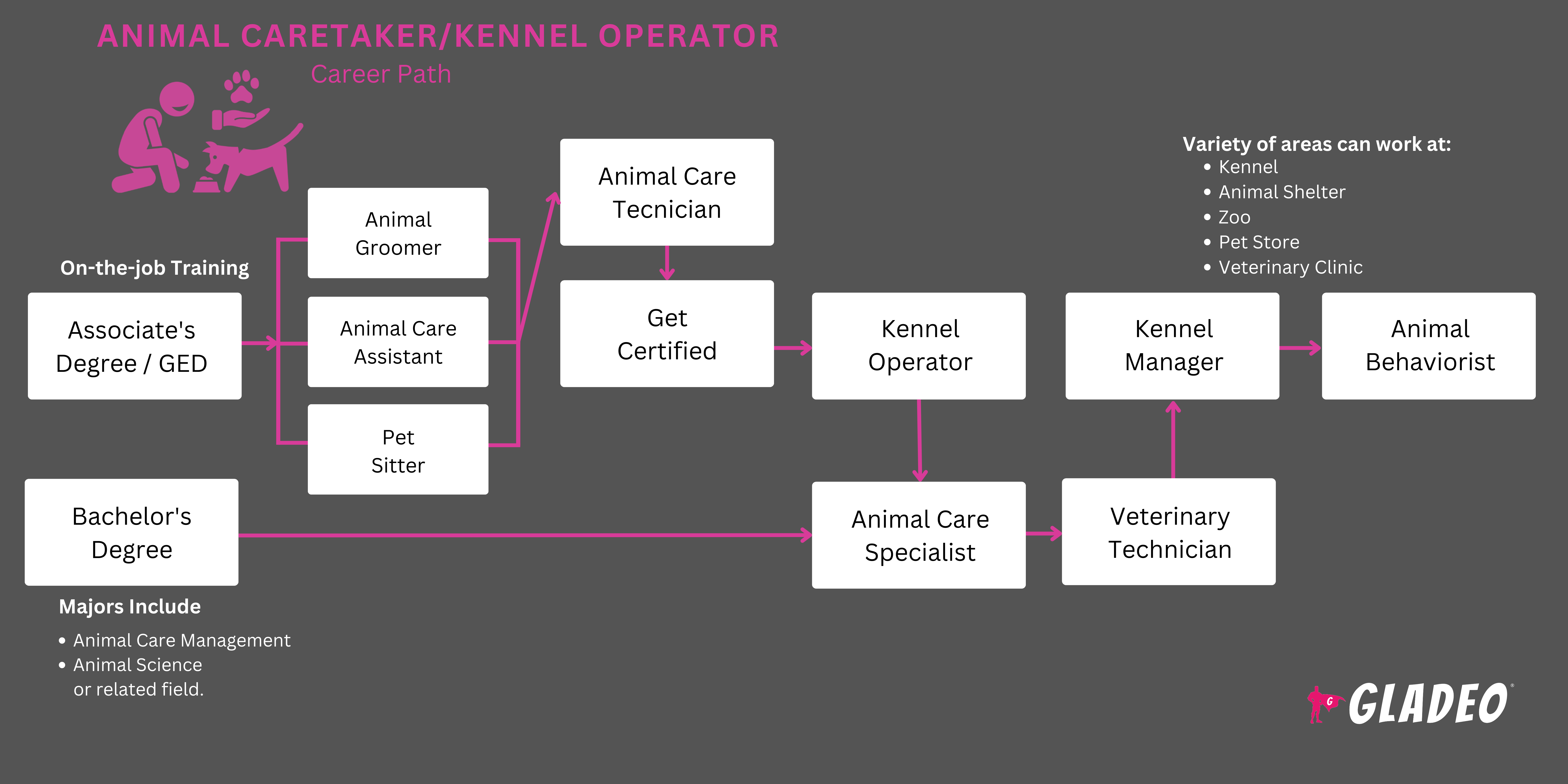
As noted by the Bureau of Labor Statistics, the “overall employment of animal care and service workers is projected to grow 29 percent from 2021 to 2031.” That’s 24% more than the average for all occupations. In other words, this career field seems ready to explode with new jobs!
But Animal Caretakers and Kennel Operators can work in many different areas. Do you want to work exclusively with dogs or cats? Are horses your area of expertise? Would you love to care for a wide range of animals, such as at a zoo? Try to decide what you specifically want to do before applying for jobs, so you can tailor your experiences to better serve your long-term career goals!
- Scan job portals like Indeed.com, Glassdoor, ZipRecruiter, and Craigslist
- Review job posts for keywords and phrases, and work those into your application materials (if applicable)
- Let your network know you’re looking for work. Many animal care-related jobs are found through personal connections
- If you already have a lot of experience, it’s not uncommon to launch your own business instead of applying to work for someone else. It may be as basic as a dog walking service or a pet boarding business
- Reach out to former coworkers, supervisors, teachers, or customers. Ask if they’ll serve as personal references. Don’t give out their contact information without permission
- Review sample Animal Caretaker and Kennel Operator resumes
- Research potential interview questions that employers or potential clients might ask you. Keep in mind, questions will vary depending on the exact type of job you are looking for
- Get familiar with the vocabulary of the field. For example, check out “dog word” or “dog grooming” glossaries!
- Build a solid reputation by taking excellent care of all animals you’re entrusted with
- Go above and beyond, every day, to ensure animals have all their needs attended to
- Keep organized and on schedule. Complete daily tasks and help other workers, as needed
- Ask for additional responsibilities, such as training new employees or volunteers
- Find ways to improve efficiency and productivity, while staying compliant with employer policies and any state or federal regulations
- Knock out continuing education and training. Consider getting specialized in a hard-to-fill niche area
- Build strong working relationships with coworkers, managers, customers, and local agencies or other service providers
- Participate in professional organizations to learn, make friends, and discover opportunities (see our list of Recommended Resources)
- If your current employer doesn’t have opportunities for advancement, consider applying for a job at a larger organization—or starting your own business!
Websites
- Alley Cat Allies
- American Association of Zoo Keepers
- American Cat Fanciers Association
- American Fisheries Society
- American Humane Association
- American Kennel Club
- American Paint Horse Association
- American Society for the Prevention of Cruelty to Animals
- American Society of Animal Science
- American Veterinary Society of Animal Behavior
- Assistance Dogs International, Inc.
- Association of Professional Dog Trainers
- Association of Zoos & Aquariums
- Center for Disease Control
- Certification Council for Professional Dog Trainers
- Certified Applied Animal Behaviorists
- dogbiz
- e-Training for Dogs
- Farm Service Agency
- Grisha Stewart’s Animal Building Blocks Academy
- International Horsemanship Association
- International Marine Animal Trainers’ Association
- National Association of Dog Obedience Instructors
- National Association of Professional Pet Sitters
- National Dog Groomers Association of America
- People for the Ethical Treatment of Animals
- Pet Partners
- Pet Sitters International
- Raising Canine
- The Association of Professional Dog Trainers
- The Wildlife Society
- U.S. Environmental Protection Agency
- U.S. Fish and Wildlife Service
- Zoological Association of America
Books
- The Confident Animal Communicator: The Ultimate Guide to Learning Intuitive Animal Communication to Help Pets, Rescue Animals, and Wildlife, by Cara Gubbins and Lauren Cassady
- The First-Aid Companion for Dogs & Cats (Prevention Pets), by Amy Shojai
- The Ultimate Pet Health Guide: Breakthrough Nutrition and Integrative Care for Dogs and Cats, by Gary Richter MS DVM
- Veterinary Guide for Animal Owners: Caring for Cats, Dogs, Chickens, Sheep, Cattle, Rabbits, and More, by C. E. Spaulding and Jackie Clay
Animal Caretakers and Kennel Operators have key roles in the safeguarding of many types of animals, in a wide range of settings. These are very hands-on jobs and, though rewarding, they do come with a few associated frustrations and hazards. If you’re interested in working with animals, but within a different occupation, check out the suggestions below!
- Animal Behaviorist
- Animal Breeder
- Animal Control Worker
- Animal Nutritionist
- Animal Photographer
- Animal Trainer
- Equine Trainer
- Marine Biologist
- Veterinarian
- Veterinary Assistant
- Zoologist and Wildlife Biologist
Newsfeed

Featured Jobs
Online Courses and Tools
Annual Salary Expectations
New workers start around $35K. Median pay is $37K per year. Highly experienced workers can earn around $43K.
Annual Salary Expectations
New workers start around $36K. Median pay is $38K per year. Highly experienced workers can earn around $47K.