





Spotlights
Product Photographer, Advertising Photographer, Corporate Photographer, Industrial Photographer, Studio Photographer, Brand Photographer, E-commerce Photographer, Business Photographer, Marketing Photographer, Catalog Photographer, Food Photographer, Real Estate Photographer
That sneaker floating perfectly against a clean white background, the burger that looks impossibly delicious on a menu, the confident headshot on a company's "About Us" page, none of it happens by accident. A Commercial Photographer builds those images from scratch, using light, angle, and precision to make ordinary products and businesses look exactly as good as they need to look to sell.
Commercial Photographers work with a wide range of clients, from small businesses needing headshots and interior shots, to major brands needing thousands of product images for an online store, to advertising agencies building a campaign around a new gadget or service. They plan shoots around a client's goals, set up lighting and backgrounds, direct the shot, and often edit the final images to match brand guidelines exactly. Unlike more artistic photography fields, commercial work is defined by a client's specific need: sell this product, represent this company, fill this ad space.
Using studio lighting, tethered cameras, product styling tools, and editing software like Photoshop and Capture One, Commercial Photographers turn a brand's raw products and spaces into polished, professional imagery. Their work shows up everywhere, on websites, in catalogs, on billboards, and in annual reports, making them a quiet but essential part of how businesses present themselves to the world.
- Solving creative problems for a huge range of clients and industries
- Seeing your images used in real ad campaigns, websites, and storefronts
- Building steady, repeatable client relationships and business income
- Mastering the technical craft of lighting and composition at a high level
Working Schedule
Commercial Photographers typically work regular business hours, since most shoots happen during the workday to accommodate client schedules and studio availability, though deadlines around product launches or ad campaigns can require extra hours. Many work as freelancers or run their own small studio businesses, while others are employed directly by advertising agencies, retailers, or manufacturing companies. Work happens in studios, client offices, warehouses, retail spaces, and sometimes on location at a client's facility, blending a structured schedule with occasional travel.
Typical Duties
- Meeting with clients to understand their brand, product, and shoot goals
- Setting up studio lighting, backdrops, and camera equipment for each shoot
- Photographing products, food, real estate, or corporate portraits
- Styling and arranging products or scenes for the most appealing shot
- Editing and retouching images to match brand and marketing standards
- Delivering final images in formats that meet client and platform requirements
- Managing multiple client projects and deadlines simultaneously
- Building and maintaining a professional portfolio and client base
- Negotiating pricing, licensing, and usage rights for images
- Traveling to client locations for on-site corporate or product photography
- Coordinating with art directors, marketing teams, or business owners
- Maintaining and upgrading camera, lighting, and studio equipment
Additional Responsibilities
- Managing invoicing, contracts, and business operations as a freelancer
- Building relationships with repeat clients and referral sources
- Marketing services through a website, portfolio, or social media
- Hiring and directing assistants or stylists for larger shoots
- Staying current on e-commerce and advertising imagery trends
- Managing a digital asset library of past client work
- Attending networking events with local businesses and agencies
- Learning new editing tools, camera technology, and lighting techniques
A Commercial Photographer's day often starts with prepping for a scheduled shoot, checking the shot list a client approved in advance, and setting up lighting and backgrounds in the studio. If the shoot is on location, mornings might involve loading gear and traveling to a client's office, restaurant, or warehouse.
Midday is usually the core shooting block, whether that means photographing dozens of products against a clean backdrop, capturing headshots for an entire company staff, or shooting a restaurant's new menu items under careful lighting. Commercial Photographers move efficiently through a shot list, checking images on a tethered screen and adjusting lighting or styling as needed to keep everything consistent.
Afternoons often shift to editing and client communication: culling and retouching images, matching color and cropping to brand specifications, and sending previews for approval. Running a photography business also means time spent on invoicing, scheduling future shoots, and following up with new client leads, since a steady pipeline of work is what keeps a commercial photography business running.
Soft Skills
- Clear communication with clients about goals and expectations
- Reliability and professionalism on tight deadlines
- Attention to detail and consistency across large sets of images
- Problem-solving when lighting or styling challenges come up
- Business and organizational skills for managing a freelance career
- Patience during repetitive or highly technical shoots
- Adaptability across different industries and shoot types
- Confidence presenting creative ideas to business clients
- Time management across multiple simultaneous projects
- Customer service orientation
- Collaboration with art directors, stylists, and marketing teams
- Persistence in building and maintaining a client base
Technical Skills
- Studio lighting setup and control
- Tethered shooting and on-set image review
- Product and food styling basics
- Photo editing and retouching in Photoshop, Lightroom, or Capture One
- Understanding of color accuracy and brand consistency
- Camera and lens selection for different commercial needs
- File formatting and delivery for web, print, and advertising use
- Basic understanding of licensing and usage rights
- Website and portfolio management
- Business finance and contract basics
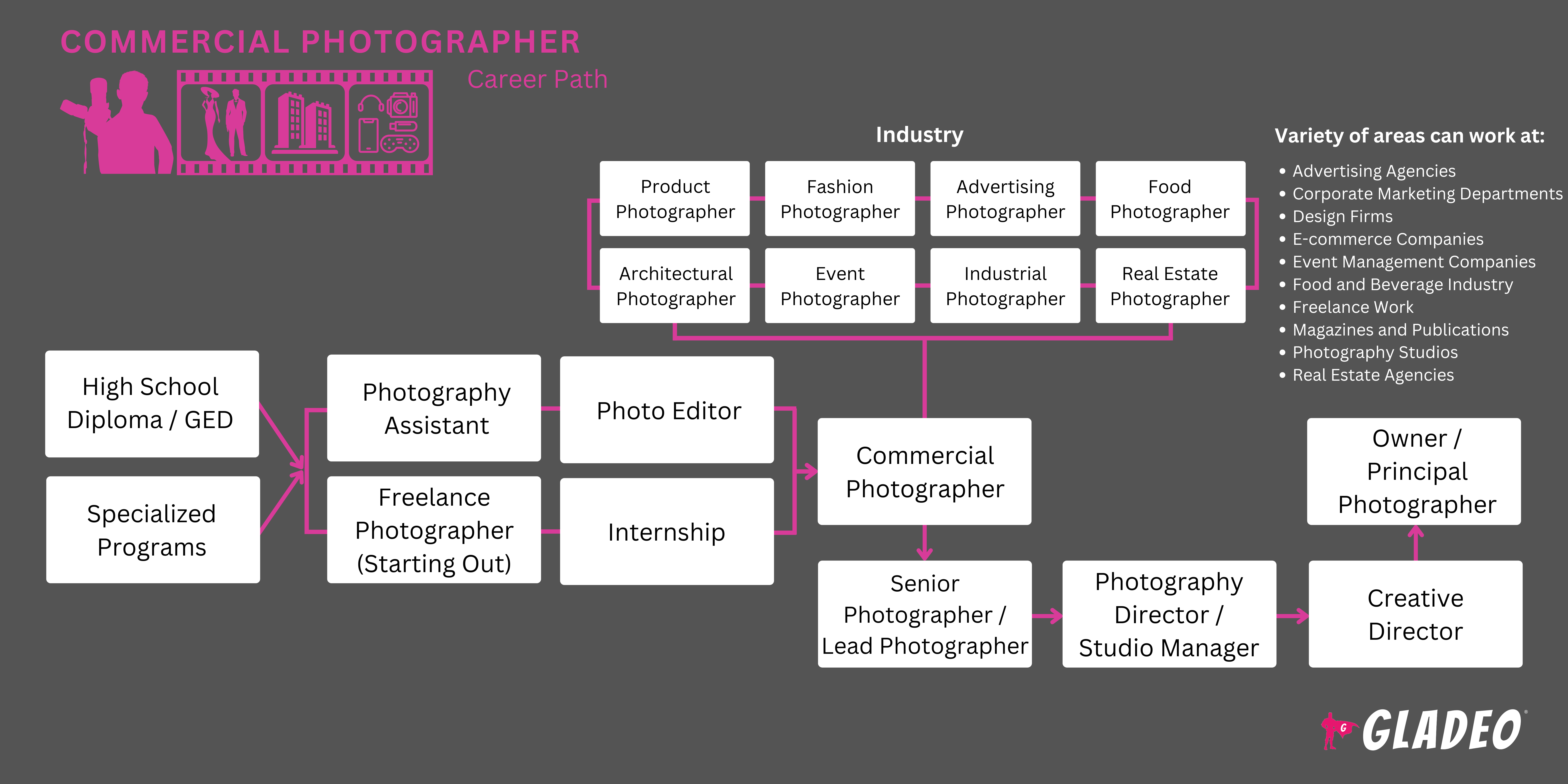
- Product Photographer: Specializes in clean, detailed images of products for retail and e-commerce
- Food Photographer: Captures appetizing images of dishes for menus, packaging, and ads
- Corporate Photographer: Shoots headshots, office environments, and company events
- Advertising Photographer: Creates concept-driven imagery for ad campaigns
- Real Estate Photographer: Photographs homes and properties for listings
- Industrial Photographer: Documents factories, equipment, and manufacturing processes
- E-commerce Photographer: Focuses on high-volume, consistent product imagery for online stores
- Architectural Photographer: Captures buildings and interior spaces for design and real estate clients
- Advertising and marketing agencies
- Retail and e-commerce companies
- Manufacturing and industrial businesses
- Real estate agencies and property management companies
- Restaurants and food and beverage brands
- Corporate offices and professional service firms
- Freelance and independent photography studios
- Stock photography agencies
- Design and branding agencies
- Trade show and event production companies
Commercial Photography demands consistency and precision, since clients are paying for images that meet a specific business need, not just artistic expression. A slightly off color or an inconsistent look across a product line can mean redoing an entire shoot, so attention to detail under deadline pressure is constant.
Much of the work is freelance or small-business based, which means inconsistent income, especially when starting out, and near-constant marketing and networking to keep a steady stream of clients. Building a reputation and repeat client base takes years, and slow seasons can be financially stressful.
The work can also be repetitive, especially with high-volume product shoots, requiring patience and a steady hand rather than constant creative reinvention. Balancing the artistic side of photography with the practical demands of running a business, managing clients, invoices, and deadlines, is one of the biggest adjustments for people entering this field.
- Explosive growth in product photography demand from e-commerce and online retail
- Increased use of 360-degree and interactive product imagery
- Rising demand for consistent, high-volume content for social media advertising
- Growth of AI-assisted background removal and image editing tools
- More businesses investing in professional headshots and remote team photography
- Expansion of video and motion content alongside traditional stills
- Growing demand for authentic, less polished "real life" branded imagery
- Increased use of drone photography for real estate and industrial clients
- Rise of subscription-based content services for ongoing brand photography needs
- Greater reliance on cloud-based file delivery and client review platforms
Many Commercial Photographers grew up curious about how things were built or presented, taking apart gadgets, rearranging their rooms, or noticing the difference between a good and bad product photo online. Some enjoyed setting up elaborate shots with toys, food, or everyday objects just to see how good they could make something ordinary look.
Others were drawn to art, design, or business early on, enjoying both the creative and practical sides of a project. A knack for organization combined with a genuine interest in photography as a craft, rather than purely as self-expression, often signaled a natural fit for the commercial side of the field.
Many Commercial Photographers pursue a bachelor's degree in photography, visual arts, or commercial art, which covers technical skills like lighting and composition alongside business fundamentals. Others build their careers through certificate programs, workshops, and hands-on assisting work, since a strong technical portfolio often matters more to clients than a specific degree.
Students can take courses in relevant subjects such as:
- Photography Fundamentals
- Studio Lighting and Equipment
- Commercial Art and Design
- Digital Photo Editing
- Product Styling
- Business of Photography
- Marketing and Branding
- Color Theory
- Small Business Management
- Video and Multimedia Basics
Hands-on experience is essential in commercial photography, since clients want to see consistent, professional-quality work before hiring someone. Assisting an established Commercial Photographer, shooting for local small businesses, or building a personal project photographing everyday products all help develop the technical precision this field demands. Learning the business side, from pricing to contracts, is just as important as mastering the camera.
- Take photography, art, and business classes to build both creative and practical skills
- Practice photographing everyday objects with careful lighting and composition
- Learn Photoshop and Lightroom through tutorials, courses, or school programs
- Offer to photograph products or headshots for local small businesses for practice
- Build a simple portfolio website showcasing your best commercial-style images
- Assist or shadow a working photographer to see the business side firsthand
- Study product photography and advertising imagery to understand what works
- Take business or entrepreneurship classes to prepare for freelance work
- Enter photography competitions or submit work for critique
- Save toward a quality camera and learn its manual and lighting settings
- Practice styling and arranging objects to make them look their best
- Reach out to local businesses about internship or shadowing opportunities
- Programs with access to professional studio space and lighting equipment
- Faculty with real-world commercial or advertising photography experience
- Coursework that covers both technical skills and small business management
- Strong internship or assisting placements with local photographers or studios
- Opportunities to build a client-ready portfolio before graduating
- Access to modern editing software and tethered shooting setups
- Career services that connect students with local businesses and agencies
- Flexible scheduling that allows for freelance work during school
- Alumni working successfully in commercial or product photography
- Programs that teach pricing, contracts, and licensing basics
- Small class sizes for hands-on studio time
- Reasonable program costs relative to necessary equipment investments
- Build a portfolio focused specifically on product, corporate, or commercial-style work
- Offer discounted or free shoots to small local businesses to build your portfolio
- Reach out directly to local shops, restaurants, and companies needing photography
- Apply for entry-level roles like studio assistant, photo assistant, or in-house photographer
- Create a clean, professional website that makes it easy for clients to reach you
- Join local business networking groups and chamber of commerce events
- Search job boards and freelance marketplaces for commercial photography gigs
- Reach out to advertising and marketing agencies about freelance opportunities
- Practice clear, professional communication about pricing and deliverables
- Build relationships with print shops, stylists, and other photographers for referrals
- Highlight consistency and reliability, qualities commercial clients value highly
- Be patient; building a steady client base usually takes consistent effort over time
- Build a reputation for reliable, high-quality, on-brand imagery
- Develop long-term contracts with repeat business or retail clients
- Raise your rates as your portfolio, efficiency, and reputation grow
- Specialize in a high-demand niche like e-commerce, food, or real estate photography
- Expand your services to include video or motion content
- Hire assistants or build a small team to handle larger volume shoots
- Invest in better equipment and studio space as your business grows
- Mentor newer photographers or teach workshops to build additional income and reputation
Websites:
- American Society of Media Photographers - asmp.org
- Professional Photographers of America - ppa.com
- PetaPixel - petapixel.com
- Fstoppers - fstoppers.com
- B&H Photo Explora - bhphotovideo.com/explora
- Shutterstock Business Resources - shutterstock.com
- AdWeek - adweek.com
- Format Magazine - format.com/magazine
- Behance Commercial Photography - behance.net
- Digital Photography School - digital-photography-school.com
- Photoshelter Blog - blog.photoshelter.com
- Small Business Administration - sba.gov
Books:
- The Photographer's Eye by Michael Freeman
- Picture Perfect Practice by Roberto Valenzuela
- Best Business Practices for Photographers by John Harrington
- Light: Science and Magic by Fil Hunter, Steven Biver, and Paul Fuqua
- The Photographer's Guide to Marketing and Self-Promotion by Maria Piscopo
If you find that being a Commercial Photographer isn't the right fit, your technical skill and eye for detail can transfer to many related careers.
- Fashion Photographer
- Videographer
- Graphic Designer
- Marketing Coordinator
- Photo Editor
- Social Media Content Creator
- Real Estate Agent
- Creative Director
- Web Content Manager
- Studio Manager
Newsfeed

Featured Jobs
Online Courses and Tools
Annual Salary Expectations
New workers start around $48K. Median pay is $61K per year. Highly experienced workers can earn around $75K.