






Spotlights
Hydroponics Technician, Aquaponics Specialist, Controlled Environment Agriculture (CEA) Technician, Urban Farming Specialist, Indoor Agriculture Technician, Horticulture Technician, Greenhouse Operations Specialist, Plant Science Technician, Sustainable Agriculture Technologist, Agritech Specialist, Precision Agriculture Technician, Agri-Systems Technician, Smart Farming Specialist
As urban populations grow and traditional farms face unpredictable weather, vertical farming has emerged as a way to produce fresh, sustainable food year-round!
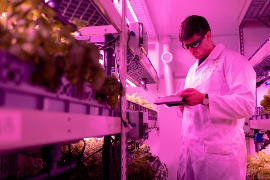
Vertical Farming Technologists combine plant science, environmental engineering, and data analytics to create indoor, climate-controlled systems to grow stacked layers of crops. Their work integrates technologies like automated hydroponic, aeroponic, and aquaponic systems to maximize crop yield and reduce the use of pesticides, water, and physical space.
As a relatively new field, vertical farming could one day be the key to ensuring we have enough food to meet the demands of our ever-growing population!
- Contributing to sustainable agriculture and global food security
- Reducing environmental impact through water conservation and pesticide-free farming
- Working with cutting-edge agricultural technologies and automation
- Improving urban access to fresh, nutritious produce
Working Schedule
Vertical Farming Technologists can work full-time, often in urban farming facilities, research labs, and agritech companies. Schedules may include early mornings or weekends, depending on crop cycles and system maintenance needs. Some work remotely, monitoring automated systems.
Typical Duties
- Research and implement vertical farming methods and technologies to enhance efficiency and sustainability.
- Design and implement controlled-environment agriculture (CEA) systems.
- Develop LED lighting strategies to enhance photosynthesis and plant growth.
- Set up and calibrate hydroponic, aeroponic, and aquaponic growing systems.
- Install and adjust climate control systems, including temperature, humidity, CO₂ levels, and airflow.
- Utilize sensors and data analytics to track crop performance and optimize yields.
- Implement automation and robotics to improve efficiency in planting, harvesting, and maintenance.
- Test and apply sustainable farming techniques to reduce waste, pesticide use, and water consumption.
- Monitor and adjust water filtration, nutrient delivery, and irrigation systems.
- Conduct soil-free plant research to improve growth rates and pest resistance.
- Ensure compliance with food safety regulations and best practices for indoor farming.
- Maintain farm equipment, troubleshoot technical issues, and perform system upgrades.
- Train farm workers and technicians on system operation and maintenance.
- Manage inventory and procurement of seeds, nutrients, and farming supplies.
- Collaborate with agricultural scientists, engineers, and data analysts to improve production.
Note, there are several closely related jobs, such as:
Controlled Environment Agriculture Specialist – Focuses on optimizing indoor growing conditions. Works in urban farms, research institutions, and agritech startups.
- Manage hydroponic, aeroponic, and/or aquaponic systems.
- Adjust temperature, humidity, CO₂ levels, and light intensity to maximize plant health.
- Troubleshoot issues related to plant diseases, nutrient deficiencies, and system failures.
- Monitor automated irrigation and nutrient delivery systems.
Agricultural Data Analyst – Uses AI and machine learning to track and optimize crop growth. Works in agritech firms, government agencies, and research centers.
- Analyze sensor data on plant health growth rates and environmental conditions.
- Develop predictive models to improve yields and reduce resource waste.
- Integrate Internet of Things (IoT) solutions to automate vertical farming processes.
- Collaborate with engineers and biologists to enhance plant genetics and farming efficiency.
Sustainable Agriculture Engineer – Designs and improves farming infrastructure for vertical farms. Works in engineering firms, agribusiness companies, and green tech organizations.
- Develop energy-efficient lighting systems such as LED spectrum optimization.
- Create water recycling and nutrient delivery systems to reduce waste.
- Integrate robotics and automation for planting, harvesting, and monitoring crops.
- Ensure compliance with food safety and agricultural regulations.
Additional Duties
- Collaborate with plant scientists, engineers, and agronomists to refine farming techniques.
- Conduct research on optimizing crop growth in controlled environments.
- Train farm workers on system operation and troubleshooting.
- Implement sustainable practices to reduce energy and water consumption.
- Stay updated on emerging trends in agritech AI-driven farming and climate resilience.
A Vertical Farming Technologist typically starts the day by checking the growing environment and reviewing data from the farm's monitoring systems. Unlike traditional farms, vertical farms grow crops in stacked layers indoors, often using hydroponic or aeroponic systems instead of soil. The technologist checks temperature, humidity, lighting, water levels, nutrient concentrations, and air circulation to make sure plants are growing under the right conditions. They may inspect leafy greens, herbs, strawberries, or other crops for signs of poor growth, pests, diseases, or nutrient deficiencies. They also review automated alerts and sensor readings to identify any problems that need attention.
Throughout the day, Vertical Farming Technologists work with growing systems, equipment, and crops. They may adjust LED lighting schedules, monitor nutrient solutions, test water pH and electrical conductivity, maintain pumps and irrigation lines, and troubleshoot automated systems. They also help plant seeds, transplant seedlings, monitor root development, prune plants, and harvest mature crops. Depending on the facility, they may use sensors, cameras, data dashboards, and environmental control software to track plant growth and improve growing conditions. They often collaborate with horticulturists, agricultural scientists, engineers, and farm workers to increase crop yields, reduce water and energy use, and prevent production problems.
Toward the end of the day, Vertical Farming Technologists record crop growth, environmental readings, maintenance activities, and any issues that occurred during production. They may analyze data to compare growing cycles, identify which conditions produce the healthiest crops, and recommend adjustments for future harvests. They also clean growing areas, sanitize equipment, check supplies, and prepare systems for the next planting cycle. Some days focus on plant care and harvesting, while others involve troubleshooting technology or experimenting with new growing methods. The work combines agriculture, science, and technology, offering the opportunity to help produce fresh food in places where traditional farming may be difficult.
Soft Skills
- Adaptability
- Analytical thinking
- Attention to detail
- Collaboration
- Communication
- Creativity
- Critical Thinking
- Decision-making
- Multitasking
- Observant
- Organization
- Patience
- Problem-solving
- Resilience
- Teamwork
- Time management
Technical Skills
Depending on their specific roles, Vertical Farming Technologists may require technical expertise related to:
- AI and machine learning applications in precision agriculture
- Automated climate and irrigation control systems
- Bioponics and alternative growing mediums
- Blockchain and traceability in food production
- Data analytics and predictive modeling for crop yields
- Energy efficiency and renewable energy integration in farming systems
- Environmental sustainability and waste reduction strategies
- Food safety and regulatory compliance
- Genetic engineering and crop optimization
- Greenhouse and vertical farm infrastructure design
- Hydroponic, aeroponic, and aquaponic farming techniques
- IoT and sensor-based agricultural monitoring
- LED lighting and spectrum optimization for plant growth
- Nutrient management and plant physiology
- Pest and disease management in controlled environments
- Robotics and automation in farming
- Supply chain management for vertical farming operations
- Urban agriculture policy and zoning regulations
- Vertical farm business operations and financial planning
- Water recycling and closed-loop irrigation systems
- Hydroponics Technician: Operates and maintains systems that grow plants in nutrient-rich water without soil.
- Aeroponics Technician: Manages systems that deliver water and nutrients to plant roots through a fine mist.
- Controlled Environment Agriculture (CEA) Technician: Monitors and controls indoor growing conditions, including temperature, humidity, lighting, and airflow.
- Vertical Farm Automation Technician: Maintains automated equipment, sensors, robotics, and computer-controlled growing systems.
- Plant Production Technician: Oversees planting, transplanting, pruning, crop maintenance, and harvesting in vertical farms.
- Irrigation and Nutrient Management Technician: Monitors water delivery, nutrient concentrations, pH, and electrical conductivity to support healthy plant growth.
- LED Lighting Technician: Installs, maintains, and adjusts specialized lighting systems to provide crops with the appropriate light intensity and spectrum.
- Crop Monitoring Technician: Inspects plants and tracks their growth, health, and environmental conditions to identify problems.
- Vertical Farming Research Technician: Assists with experiments involving crop varieties, growing methods, lighting, nutrients, and environmental conditions.
- Post-Harvest Quality Technician: Inspects and handles harvested crops to maintain freshness, product quality, and food safety.
- Agritech startups
- Automation or AI-driven farming solution companies
- Controlled environment agriculture facilities
- Government agencies
- Research institutions
- Urban vertical farms
Vertical Farming Technologists work in a fast-moving industry where innovation is essential. Staying ahead in this field means keeping up with the latest in controlled environment agriculture, automation, and sustainability. The job calls for sharp problem-solving skills and serious attention to detail, because even tiny changes in temperature, humidity levels, or lighting can ruin a crop harvest.
There’s also plenty of hands-on work involved to maintain systems, troubleshoot equipment, and check on plant health. Long hours often come with the territory, especially during critical growth phases, system upgrades, or outages.
In startup environments, job stability can be unpredictable, since funding and profitability in vertical farming are still evolving. The consumer demand for fresh, locally sourced produce is strong, but it can be a challenge to get new businesses off and running.
The idea of vertical farming isn’t exactly new. One of the first known instances of it dates back ~2,500 years ago to the Hanging Gardens of Babylon. But only recently has the concept really started to take off!
Today’s Vertical Farming Technologists are blending cutting-edge technology with agriculture to optimize food production like never before. Artificial intelligence is revolutionizing plant monitoring, with AI-driven systems analyzing crop health, predicting growth rates, and fine-tuning nutrient delivery. Machine learning models take it a step further, automating irrigation schedules and adjusting lighting conditions to match the specific needs of each plant.
Meanwhile, IoT (Internet of Things) technology has transformed modern farms into smart, data-driven ecosystems. Sensors track temperature, humidity, CO₂ levels, and nutrient distribution in real time, giving farmers remote control over growing conditions with just a few taps on a screen.
As sustainability becomes a priority, many vertical farms are turning to renewable energy solutions, integrating solar panels, wind power, and closed-loop water recycling systems to cut environmental impact and operational costs.
Advances in gene editing, like CRISPR, are also reshaping the industry, helping develop crops that grow faster, require fewer resources, and resist pests naturally. And with urban farms popping up in city centers and even inside grocery stores, fresh, locally grown produce is reaching consumers faster than ever – without the long supply chains and high emissions of traditional agriculture!
Many Vertical Farming Technologists had an early fascination with plants, science, and technology. They may have enjoyed gardening, experimenting with hydroponic or aquaponic systems, or conducting science fair projects related to sustainability.
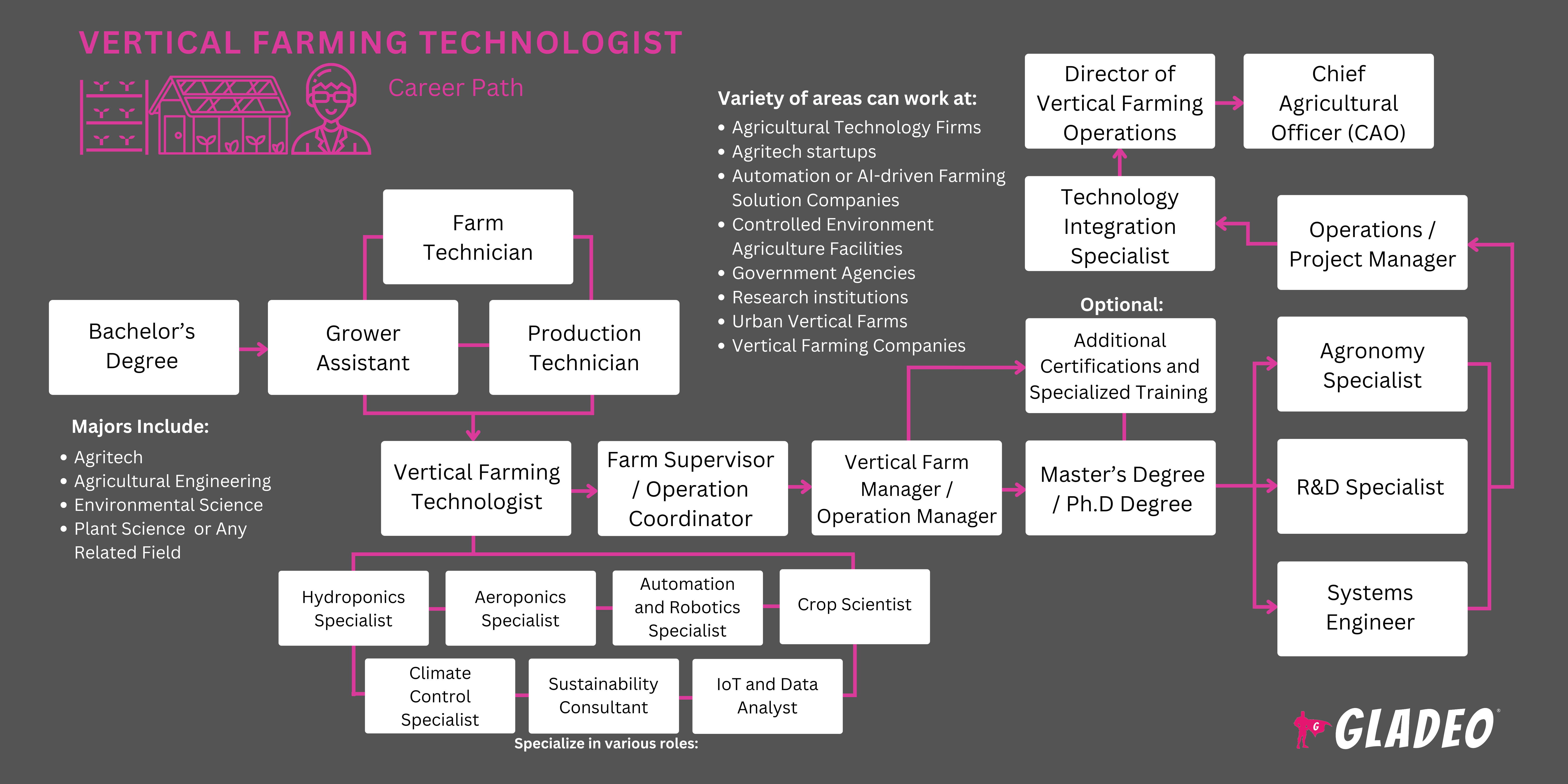
Vertical Farming Technologists generally need education or training in horticulture, plant science, agricultural technology, or a related field. Some entry-level positions accept a high school diploma or GED combined with hands-on experience, while more technical roles may prefer an associate or bachelor's degree. Since vertical farming combines agriculture, science, and technology, employers look for candidates who understand plant growth, hydroponics, irrigation, environmental controls, and automated growing systems.
Students can take courses in relevant subjects such as:
- Introduction to Horticulture and Plant Science
- Plant Biology and Physiology
- Hydroponics and Soilless Growing Systems
- Controlled Environment Agriculture
- Greenhouse and Indoor Crop Production
- Plant Nutrition and Soil Science
- Irrigation and Water Management
- Agricultural Technology and Automation
- Environmental Science and Sustainability
- Plant Diseases and Pest Management
- Electrical Systems and Equipment Maintenance
- Computer Applications and Data Analysis
Training programs teach students how to operate indoor growing systems, prepare nutrient solutions, monitor plant health, and maintain the equipment used in crop production. They learn to measure water pH and electrical conductivity, adjust lighting schedules, monitor temperature and humidity, and troubleshoot irrigation and ventilation systems. Some programs also introduce automated growing equipment, environmental monitoring software, and data collection tools. Hands-on experience is particularly important because technicians must understand how changes in growing conditions affect plant development, crop quality, and yields.
Students may pursue an associate or bachelor's degree in horticulture, agricultural technology, plant science, greenhouse management, or agricultural engineering technology. Others enter the field through vocational programs, specialized hydroponics training, or on-the-job instruction at greenhouses and vertical farms. Additional training in food safety, integrated pest management, water quality, and agricultural automation can help candidates qualify for specialized positions. Depending on their responsibilities, some workers may also need pesticide application training or a state-issued license.
Getting started often involves gaining practical experience through internships, school projects, greenhouses, hydroponic farms, or agricultural research facilities. Once hired, new technicians typically receive training on the employer's growing systems, crop schedules, monitoring software, sanitation procedures, and safety requirements. With experience and further education, they may advance into positions such as Vertical Farm Supervisor, Hydroponics Manager, Controlled Environment Agriculture Specialist, or Indoor Farm Operations Manager.
- Take courses in biology, chemistry, environmental science, physics, and mathematics
- Learn about photosynthesis, plant nutrition, plant diseases, and the environmental conditions plants need to grow
- Join agriculture, gardening, science, robotics, or environmental clubs
- Start a small hydroponic garden at home or school to practice growing plants without soil
- Experiment with growing lettuce, herbs, or other crops under different lighting and watering conditions
- Visit greenhouses, hydroponic farms, botanical gardens, and vertical farming facilities
- Look for internships or volunteer opportunities with farms, nurseries, agricultural research centers, or greenhouse businesses
- Explore computer science, robotics, electronics, and data analysis classes to understand automated growing systems
- Learn to use basic measuring instruments such as pH meters, thermometers, and electrical conductivity meters
- Consider an associate or bachelor's degree in horticulture, plant science, agricultural technology, or a related field
- Participate in science fairs or research projects involving hydroponics, plant growth, water conservation, or indoor agriculture
- Keep a journal of plant growth and record how changes in light, temperature, and nutrients affect crops
- Develop problem-solving and observation skills by identifying and addressing plant or equipment problems
- Connect with professionals in vertical farming and controlled environment agriculture to learn about career opportunities
- Programs accredited by recognized educational or technical accrediting organizations
- A curriculum covering horticulture, plant science, hydroponics, and controlled environment agriculture
- Hands-on training with hydroponic, aeroponic, and other soilless growing systems
- Courses in plant nutrition, water quality, pH, and electrical conductivity
- Training in environmental controls, including temperature, humidity, airflow, and LED lighting
- Opportunities to learn about agricultural automation, sensors, monitoring software, and data analysis
- Access to greenhouses, indoor growing facilities, hydroponic laboratories, or demonstration farms
- Instruction in integrated pest management, plant disease prevention, sanitation, and food safety
- Courses covering irrigation, water conservation, energy efficiency, and sustainable agriculture
- Opportunities to conduct crop trials or research projects involving different plants and growing conditions
- Internships or partnerships with vertical farms, greenhouse businesses, agricultural technology companies, and research centers
- Instructors with professional experience in horticulture, agricultural technology, engineering, or controlled environment agriculture
- Training in equipment maintenance, troubleshooting, and workplace safety
- Preparation for relevant industry training or certifications in food safety, pesticide safety, and equipment operation
- Clear information about tuition, laboratory fees, equipment costs, and available financial aid
- For college programs, regional accreditation and transferable credits if you plan to pursue a bachelor's degree later
- Polish your professional portfolio so it is ready to show potential employers.
- Network with industry professionals at agricultural technology conferences like Indoor Ag-Con, urban farming expos, and sustainability events.
- Apply for internships with vertical farming companies, agritech firms, or research institutions.
- Create a LinkedIn profile highlighting technical skills, research projects, and work experience.
- Search job portals like Indeed and directly via employer websites (see their career pages for current job openings).
- Customize your resume with relevant keywords such as hydroponics, agritech, controlled environment agriculture, automation, and precision farming.
- Check out vertical farming-related resume templates for inspiration. Be sure to tailor each application to the specific job.
- Stay informed on industry advancements, such as AI-driven farming, climate-smart agriculture, and automation trends. Be ready to discuss trends during interviews!
- Prepare for interviews by researching the employer’s projects, mission, and current work.
- Practice answering common interview questions, such as:
- “How do you manage pH and nutrient levels in a hydroponic system?”
- “How do you calculate the ideal light intensity (PPFD) for different crops?”
- “Can you describe a smart sensor system used for monitoring plant health?”
- Prepare for interviews by researching companies, their methods, and any recent innovations.
- Seek recommendation letters or references from professors, research supervisors, or internship mentors. Always ask permission before giving out their contact information.
- Brush up on standard industry terminology.
- Stay updated on industry trends, emerging technologies, and ethical considerations in human-robot interaction.
- Dress appropriately for job interviews!
- Let your supervisor know you’re interested in career advancement!
- Complete a master’s or Ph.D. in a relevant major such as controlled environment agriculture, sustainable food systems, or precision agriculture.
- Earn advanced certifications in hydroponics, precision agriculture, sustainable food systems, or agricultural data analytics.
- Attend advanced workshops, webinars, and agritech conferences to expand your industry knowledge.
- Join professional organizations like the Association for Vertical Farming to learn and network.
- Stay updated on emerging trends such as AI-assisted crop monitoring, robotic harvesting, and plant genetics optimization.
- Seek leadership roles in agritech startups, research institutions, or urban farming initiatives.
- Work towards management positions, such as Vertical Farm Operations Manager or Agritech Director, to oversee large-scale operations. Knock out relevant management certifications like:
- Certified Manager – Institute of Certified Professional Managers
- Project Management Professional – Project Management Institute
- Certified Associate in Project Management – PMI
- Lean Six Sigma
- Supervisory Management Certificate – American Management Association
- Certified Greenhouse Grower – AmericanHort
- Certified Crop Advisor – American Society of Agronomy
- Controlled Environment Agriculture Certification
- Indoor Ag-Con Leadership Program – Indoor Ag-Con
- Certified Supply Chain Professional – APICS
- Operations Management Certificate
- HACCP Certification – International HACCP Alliance or NSF International
- Certified Food Safety Manager – National Registry of Food Safety Professionals
- Global G.A.P. Certification – Good Agricultural Practices Standards
- Collaborate with professionals in AI, machine learning, and environmental engineering to develop new farming technologies.
- Publish research or case studies on innovative hydroponic techniques, vertical farming sustainability, and smart agriculture.
- Take on mentorship roles by guiding interns and junior technologists in the industry.
Websites
- AgFunder News
- Agritech Tomorrow
- AmericanHort
- American Society for Horticultural Science
- Association for Vertical Farming
- Controlled Environment Agriculture Center
- CropKing
- FarmBot
- FarmTech Society
- RUAF Global Partnership
- Greenhouse Grower
- Greenhouse Technology Network
- Indoor Ag-Con
- International Association for Agricultural Sustainability (IAAS)
- International Plant Nutrition Institute
- International Plant Propagators’ Society
- International Society for Horticultural Science
- National Gardening Association
- Plant Factory Journal
- PrecisionAg Institute
- Urban Ag News
- Urban Agriculture Consortium
- Vertical Farm Daily
Books
- Field Guide to Urban Gardening: How to Grow Plants, No Matter Where You Live, by Kevin Espiritu
- Indoor and Vertical Gardening: The Ultimate Guide to Growing Fruit, Herbs, Vegetables, and Flowers Indoors…, by Dion Rosser
- Introduction to Vertical Farming, by Rosemary Dimmock
- Plant Factory, by Toyoki Kozai Ph.D., Genhua Niu Ph.D., et al.
Vertical Farming Technologists play a vital role in shaping the future of sustainable agriculture. But if this career isn’t the right fit for you, there are plenty of related paths to explore!
- Agricultural and Food Science Technician
- Agricultural Data Analyst
- Agricultural Engineer
- Agronomist
- AgTech Entrepreneur
- Aquaponics Technician
- Biological Systems Engineer
- Controlled Environment Agriculture (CEA) Specialist
- Crop Research Scientist
- Ecologist
- Environmental Engineer
- Environmental Scientist
- Farmer or Rancher
- Food Technologist
- Greenhouse Manager
- Grounds Maintenance Worker
- Horticulturist
- Landscaper
- Naturalist
- Nursery Technician
- Pesticide Handler
- Plant Biologist
- Renewable Energy Specialist
- Smart Farming Systems Developer
- Soil and Water Conservationist
- Soil Scientist
- Sustainable Agriculture Consultant
- Urban Agriculture Specialist
- Vineyard Manager
Newsfeed

Featured Jobs
Online Courses and Tools