





Spotlights
Aquatic Biologist, Conservation Biologist, Fish and Wildlife Biologist, Fisheries and Wildlife Biological Scientist, Fisheries Biologist, Forest Wildlife Biologist, Habitat Biologist, Wildlife Biologist, Wildlife Refuge Specialist, Zoologist
Wild animals and their habitats play a huge role in keeping our planet healthy—and Zoologists and Wildlife Biologists are the experts who study how these animals live, survive, and connect with the environment. They dig into animal behavior, habitats, and ecosystems to better understand what animals need to thrive.
These scientists spend time outdoors tracking animals, watching how they move and interact, or work in labs studying animal biology and genetics. They also help protect endangered species and restore natural habitats by using their research to shape conservation efforts and environmental policies.
From forests to wetlands to grasslands, Zoologists and Wildlife Biologists are on the front lines of wildlife protection, helping communities and governments make smart choices to preserve nature for the future. If you’re passionate about animals and want to make a real impact on protecting wildlife and their homes, this career is a perfect fit!
- Seeing animals thrive in restored or protected habitats.
- Discovering new species behaviors or migration patterns through field research.
- Working outdoors in some of the most breathtaking environments on Earth.
- Helping endangered species recover through conservation action.
- Knowing your work supports global biodiversity and ecosystem health.
Working Schedule
- Zoologists and wildlife biologists usually work full-time. Fieldwork may include early mornings, late evenings, or overnight stays to observe animals in their natural behavior cycles. Lab and office work often follows standard business hours. Travel is common for research, conservation projects, and conferences.
Typical Duties
- Observe and document animal behavior, health, and population trends.
- Collect samples (such as hair, feathers, or water) for lab analysis.
- Track animal movements using GPS collars, camera traps, or drones.
- Analyze data to understand species distribution and environmental impacts.
- Write scientific reports and present findings to agencies, NGOs, or the public.
- Develop and implement wildlife conservation and management plans.
Additional Responsibilities
- Collaborating with park rangers, conservation officers, and community stakeholders.
- Training interns, volunteers, or students on fieldwork techniques.
- Advising policymakers on habitat protection and wildlife laws.
- Monitoring the effects of human activities, pollution, or climate change on wildlife.
- Conducting public outreach and education programs to raise conservation awareness.
- Applying for research grants and managing project budgets.
- Participating in international conservation efforts and scientific collaborations.
A typical day for a zoologist or wildlife biologist often begins early. They may set up observation equipment or check tracking stations before sunrise when animals are most active. Field time involves watching, recording, and sometimes tagging animals for study.
Afternoons might be spent entering data into computer systems, analyzing results, and drafting reports. During certain seasons—like migration or breeding—they may camp in the field for days at a time.
As one wildlife biologist explains, “Every day is different. Some days I’m hiking through forests; other days, I’m deep in data. But every part of the work helps us protect these animals for future generations.”
Soft Skills:
- Observation and attention to detail
- Patience and perseverance
- Analytical thinking
- Clear communication and writing
- Collaboration and teamwork
- Problem-solving
- Physical stamina
- Cultural and ecological awareness
- Adaptability to outdoor conditions
Technical Skills:
- Wildlife tracking and tagging technologies (GPS, camera traps, drones)
- Statistical and ecological data analysis
- Laboratory techniques and field sampling methods
- Geographic Information Systems (GIS)
- Knowledge of wildlife biology, ecology, and environmental science
- Scientific report writing
- Conservation planning and policy knowledge
- Use of research software and databases
- Mammalogists: Focus on mammals like bears, bats, or elephants.
- Ornithologists: Specialize in birds and their habitats.
- Herpetologists: Study reptiles and amphibians.
- Entomologists: Research insects and their roles in ecosystems.
- Marine Biologists: Focus on ocean species and coastal ecosystems.
- Conservation Biologists: Work to protect endangered species and biodiversity.
- Behavioral Zoologists: Study animal communication, mating, and social behaviors.
- National parks and wildlife refuges
- Federal or state environmental agencies
- Conservation nonprofits and NGOs
- Zoos and aquariums
- Universities and research institutions
- Environmental consulting firms
- International conservation organizations
This career isn’t for those who want a predictable routine. Fieldwork can mean working in hot sun, heavy rain, mud, or freezing temperatures. You may spend long hours in remote areas with limited access to comfort.
Much of the work is driven by funding cycles, which means writing grant proposals and waiting for approvals. And sometimes, your research may not produce immediate results.
But the rewards are powerful—you’ll be helping protect species, restoring habitats, and contributing to science that matters.
The world of studying wildlife is changing fast as we face new challenges like habitat loss and climate change! Zoologists and Wildlife Biologists are now using high-tech tools like drones, GPS tracking, and even AI (Artificial Intelligence) to gather detailed information about animals and their environments. These technologies help scientists track animal movements, monitor populations, and predict how species will adapt in the future.
At the same time, there’s a growing push for wildlife conservation and protecting ecosystems, with people demanding more transparency about how animals and habitats are managed. Zoologists and Wildlife Biologists are key players in making sure conservation efforts meet these higher standards.
Sustainability is a big focus too—these scientists work on creating plans that protect wildlife while allowing humans to live and grow responsibly. If you’re excited by combining nature, technology, and science to help animals and the planet, this field is full of opportunities!
Many zoologists and wildlife biologists loved exploring nature, observing animals, bird-watching, or keeping pets. They often enjoyed science fairs, documentaries about wildlife, and spending time outdoors. Curiosity about how animals live and interact with their environment was a common trait.
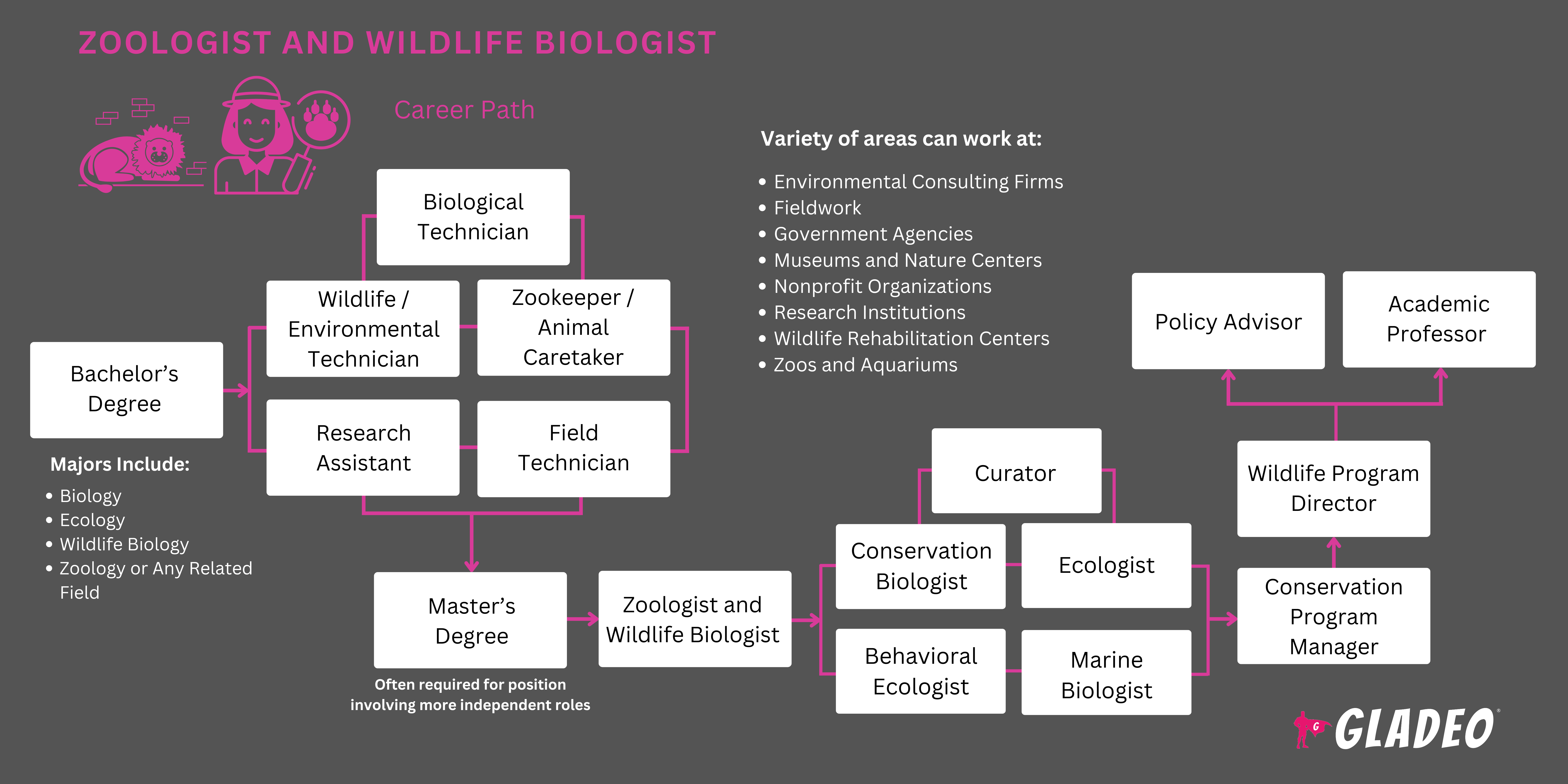
Zoologists and Wildlife Biologists generally need at least a bachelor's degree in zoology, wildlife biology, biology, ecology, or a related field. The exact requirements depend on the position. Entry-level jobs involving field research, wildlife surveys, and habitat monitoring may accept a bachelor's degree, while independent research, university teaching, and senior scientific positions often require a master's degree or Ph.D. A strong background in biology, ecology, chemistry, mathematics, and statistics is important because these professionals study animal behavior, populations, genetics, habitats, and the effects of environmental changes on wildlife.
Students can take courses in relevant subjects such as:
- Introduction to Zoology and Wildlife Biology
- Animal Behavior and Ethology
- Ecology and Ecosystem Management
- Conservation Biology
- Evolution and Genetics
- Animal Anatomy and Physiology
- Wildlife Population Biology
- Botany and Plant Ecology
- Environmental Science
- Statistics and Biometry
- Geographic Information Systems (GIS) and Remote Sensing
- Wildlife Management and Habitat Conservation
- Chemistry and Biochemistry
- Research Methods and Scientific Writing
College programs typically combine classroom instruction, laboratory
work, and field experience. Students learn how to identify animal species, observe wildlife behavior, collect biological samples, track animal populations, analyze data, and assess habitats. Fieldwork may involve using binoculars, camera traps, GPS devices, radio telemetry, and other research equipment. Some programs offer opportunities to study in forests, wetlands, grasslands, marine environments, or wildlife reserves.
Practical experience is especially valuable. Students can gain it through internships, undergraduate research, seasonal fieldwork, or volunteer opportunities with wildlife rehabilitation centers, zoos, conservation organizations, government agencies, and research laboratories. Those interested in wildlife research may also learn specialized techniques such as animal tagging, population surveys, genetic sampling, and habitat assessment. Depending on the job, additional training in wilderness first aid, boating, driving, or safe wildlife handling may be useful.
Some positions have additional requirements. For example, Wildlife Biologists who handle or capture certain animals may need permits or training under federal and state wildlife regulations. Those who work with protected migratory birds, endangered species, or other regulated wildlife must follow applicable permits and handling requirements. Jobs involving pesticide use, boating, firearms, or specialized equipment may also require separate training or licenses. A master's degree or Ph.D. can open opportunities in advanced research, university teaching, and leadership positions. Professional development through organizations such as The Wildlife Society can also help workers build expertise and professional connections.
- Learn to identify local wildlife, birds, mammals, reptiles, amphibians, insects, and other animal species
- Join science, environmental, wildlife, or nature clubs at school
- Volunteer at wildlife rehabilitation centers, animal shelters, zoos, aquariums, or conservation organizations
- Visit national parks, wildlife refuges, nature reserves, and botanical gardens to observe animals and their habitats
- Participate in birdwatching, wildlife observation, nature photography, or local biodiversity surveys
- Look for internships or summer opportunities with universities, wildlife research centers, conservation groups, or government agencies
- Participate in science fairs or research projects involving animal behavior, biodiversity, ecosystems, or wildlife conservation
- Learn basic data collection, statistics, and spreadsheet skills to help organize and analyze research findings
- Explore Geographic Information Systems (GIS), mapping, and GPS technology to understand how researchers track wildlife and study habitats
- Develop outdoor skills such as hiking, camping, navigation, and using binoculars and field equipment
- Consider a bachelor's degree in zoology, wildlife biology, ecology, biology, or a related field
- Seek opportunities to assist professors with wildlife research or participate in undergraduate field studies
- Build writing and communication skills by preparing scientific reports and presenting research findings
- Research graduate programs if you are interested in advanced research, university teaching, or leading scientific projects
- Take courses in biology, chemistry, environmental science, zoology, and mathematics
- Programs accredited by recognized higher education accrediting organizations
- A curriculum covering zoology, wildlife biology, ecology, animal behavior, genetics, and conservation biology
- Courses in animal anatomy, physiology, evolution, population biology, and ecosystem management
- Hands-on laboratory and fieldwork opportunities involving animal observation, species identification, and wildlife surveys
- Access to laboratories, research facilities, wildlife collections, and field research stations
- Training in wildlife tracking, animal sampling, population monitoring, and habitat assessment
- Opportunities to learn Geographic Information Systems (GIS), GPS technology, remote sensing, and statistical analysis
- Courses in research methods, scientific writing, data collection, and experimental design
- Instruction in wildlife conservation laws, environmental regulations, and ethical animal handling
- Opportunities to study different ecosystems, including forests, wetlands, grasslands, deserts, and marine habitats
- Internships or partnerships with zoos, wildlife refuges, conservation organizations, research centers, and government agencies
- Faculty members with professional experience in zoology, wildlife research, ecology, or conservation
- Opportunities to assist with faculty research, publish findings, or present work at scientific conferences
- Preparation for professional development and certification opportunities through organizations such as The Wildlife Society
- Clear information about tuition, fieldwork expenses, laboratory fees, and available financial aid
- For graduate programs, opportunities to conduct original research and work closely with experienced faculty members
- Start by signing up for job alerts on popular job portals like Indeed, SimplyHired, Monster, USAJobs, and Glassdoor to catch relevant openings early. Build a LinkedIn profile and connect with professionals because networking is key—about 85% of jobs are found through connections.
- When reviewing job postings, look for keywords to include on your resume such as Wildlife Management, Ecology, GIS, Data Analysis, Conservation, Environmental Compliance, Animal Behavior, and Research Methods.
- Check out sample resumes and interview questions to prepare, focusing on topics like your strategies for animal conservation, experience with fieldwork or data collection, and how you communicate scientific findings to various audiences.
- Research potential employers thoroughly—their mission, projects, and values—and explore their career pages. Use your school’s career services for resume reviews, mock interviews, and job fairs.
- Seek internships, volunteer work, or research assistant roles to gain practical experience. Try to shadow or interview zoologists and wildlife biologists to get insider knowledge.
- Finally, dress professionally for interviews and ask previous professors or supervisors for recommendation letters or permission to use them as references.
- Let your supervisor know early on that you’re interested in growing your career and taking on more responsibility. Seek their advice on advancement options—there are many paths, including research, teaching, conservation management, and specialized fields within zoology and wildlife biology.
- Keep advancing your skills through continuing education, such as graduate degrees (Master’s or Ph.D.), which often open doors to leading research projects and higher-level positions. Acquire certifications like those from The Wildlife Society (Certified Wildlife Biologist) or GIS certifications to boost your credentials.
- Try to gain experience across various projects—field research, lab work, conservation programs—to build a strong, diverse skill set. Then consider focusing on a niche area like marine biology, endangered species management, or ecological policy.
- Stay active in professional organizations and networks to learn about industry trends, regulatory changes, and networking opportunities.
- Keep in mind that smaller organizations may offer fewer advancement opportunities, so you might need to consider changing employers or geographic locations to move up the ladder.
- Being proactive about your career development, staying current with scientific advancements, and building a strong professional reputation are key to climbing the ladder in this field.
Websites
- U.S. Fish and Wildlife Service
- The Wildlife Society
- National Park Service
- Conservation Job Board
- Nature.org (The Nature Conservancy)
- World Wildlife Fund Careers
- Conservation International
- Wildlife Conservation Society
- Audubon Society
- Defenders of Wildlife
- Sierra Club
- National Wildlife Federation
- EnvironmentalCareer.com
- EcoJobs.com
- GreenJobs.net
Books
- Wildlife Biology by Raymond F. Dasmann
- The Song of the Dodo by David Quammen
- Silent Spring by Rachel Carson
- Conservation Biology by Fred Van Dyke
If becoming a Zoologist or Wildlife Biologist isn’t the perfect fit, related paths let you work with nature and conservation in different ways:
- Park Ranger
- Environmental Educator
- Animal Trainer or Care Specialist
- Marine Technician
- Environmental Consultant
- Veterinary Technician
- Ecotourism Guide
- GIS Mapping Technician
Newsfeed

Featured Jobs
Online Courses and Tools